Products and portfolio · Doka · 23/10/2026
Everyday products need a reason to stay
The right category does not guarantee the expected use. Packaging, occasion and effort help explain the place a brand can keep in everyday life.
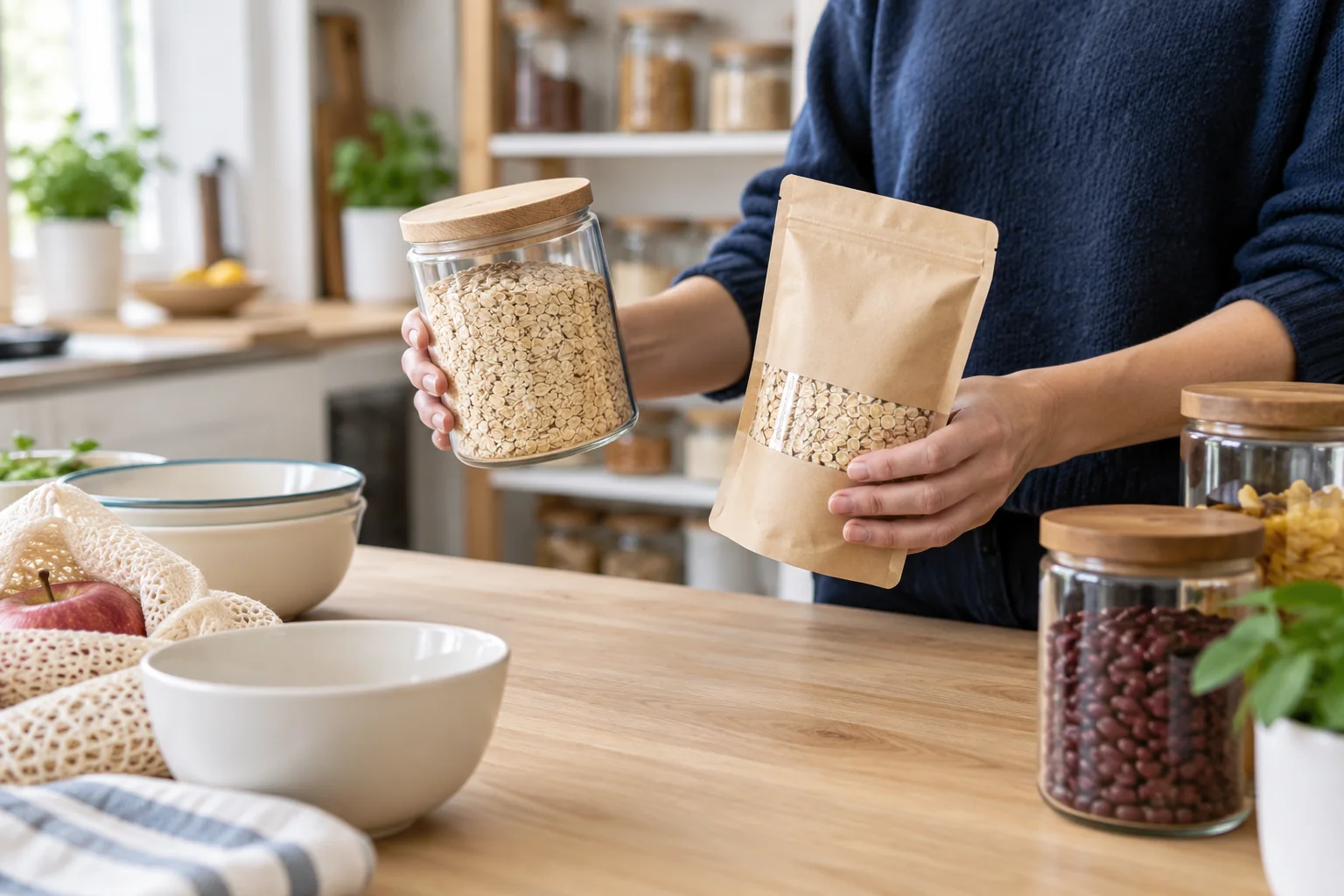
A product enters the basket as a promise. It then needs to fit the cupboard, open easily, last long enough and deliver what prompted the purchase. Across that journey, a value proposition can become useful or lose its appeal.
The work a package creates
Carrying, storing, measuring, resealing and disposing of packaging take effort. A format with a lower unit cost may be inconvenient for someone who uses it slowly. A smaller one may make a purchase easier while requiring more frequent replacement. These possibilities still require price and quantity comparisons.
Accounts of leaks, difficult openings or leftovers help frame questions. On their own, they do not establish how common a problem is or whether a change would be accepted. Materials, use and alternatives all matter.
A promise needs to remain testable
Convenience, yield and simplicity can guide a decision only when their meaning is defined for the task. Changing composition, quantity or presentation changes the experience and the buyer's comparison. Terms need to remain understandable.
A portfolio can also gain items without serving additional situations. Before creating another variant, teams should investigate whether it solves a distinct problem or divides existing demand.
A route for investigation
Start with the use situation, follow the path from purchase to consumption and compare accounts from people who repeated, substituted or stopped using the product. Where authorized records exist, compare explanations with repeat purchases, returns and line performance over compatible periods.
Doka's hypothesis is that part of a preference depends on how easily a product fits everyday life. Testing this requires observing what changes when the task becomes easier, without assuming that stated intent becomes a purchase. For brands entering Brazil, the local task should guide adaptation beyond translating the package.
Adapt to the Brazilian routine
For a product investigation in Brazil, compare the use occasion, available space, outlay in reais and the feasible interval between purchases. A pack chosen for a stock-up trip may face different demands from one bought for immediate consumption.
These situations need assessment within the audiences and channels defined in the brief. Translating an overseas offer is insufficient, as is assuming that one pack serves every Brazilian household in the same way.
Editorial scope
A Doka editorial perspective for decisions in Brazil. Proposed hypotheses require investigation within each project. AI-generated illustrative image.