Why replace a car? Comfort, cost, space and the compromises buyers accept
Inside this edition
Read the analysis, compare competing explanations and examine the conditions behind the proposed actions.
Explore the contents ↓Includes the complete PDF in Portuguese and English, with this edition's identified supplements. Download from your customer library after confirmed payment, while platform access is active. Downloaded files are for continued internal company use; resale and external publication are not included.
What this report covers
Questions for your business
- In which situations do models in your portfolio improve the experience of people who buy, consider or reject an option?
- When a benefit is recognised, what prevents replacement: total price, down payment, trade-in valuation or another condition?
- How does the risk of losing access to the car affect the choice, and what can the local operation demonstrate about support?
Executive analysis
- The research question and the main interpretation, within the limits of this edition.
Documented observations
- The findings and the scope of the evidence supporting them.
Accounts and competing explanations
- 28 selected accounts in the original edition, with their contexts and limitations.
- Interpretations and counterpoints; public accounts do not establish population-wide preferences.
Paths for action
- 3 conditional proposals, with validation criteria; implementation is not included.
References and research limits
- Sources and methodological limits are collected at the end of the complete report.
What the accounts suggest
In these accounts, people consider replacing a car when an alternative meets a need their current vehicle no longer meets, at a cost they are willing to accept. That may mean a better seating position, clearing uneven roads without scraping, more comfortable journeys or lower fuel use when regular charging is possible.
An extract also included in the complete report
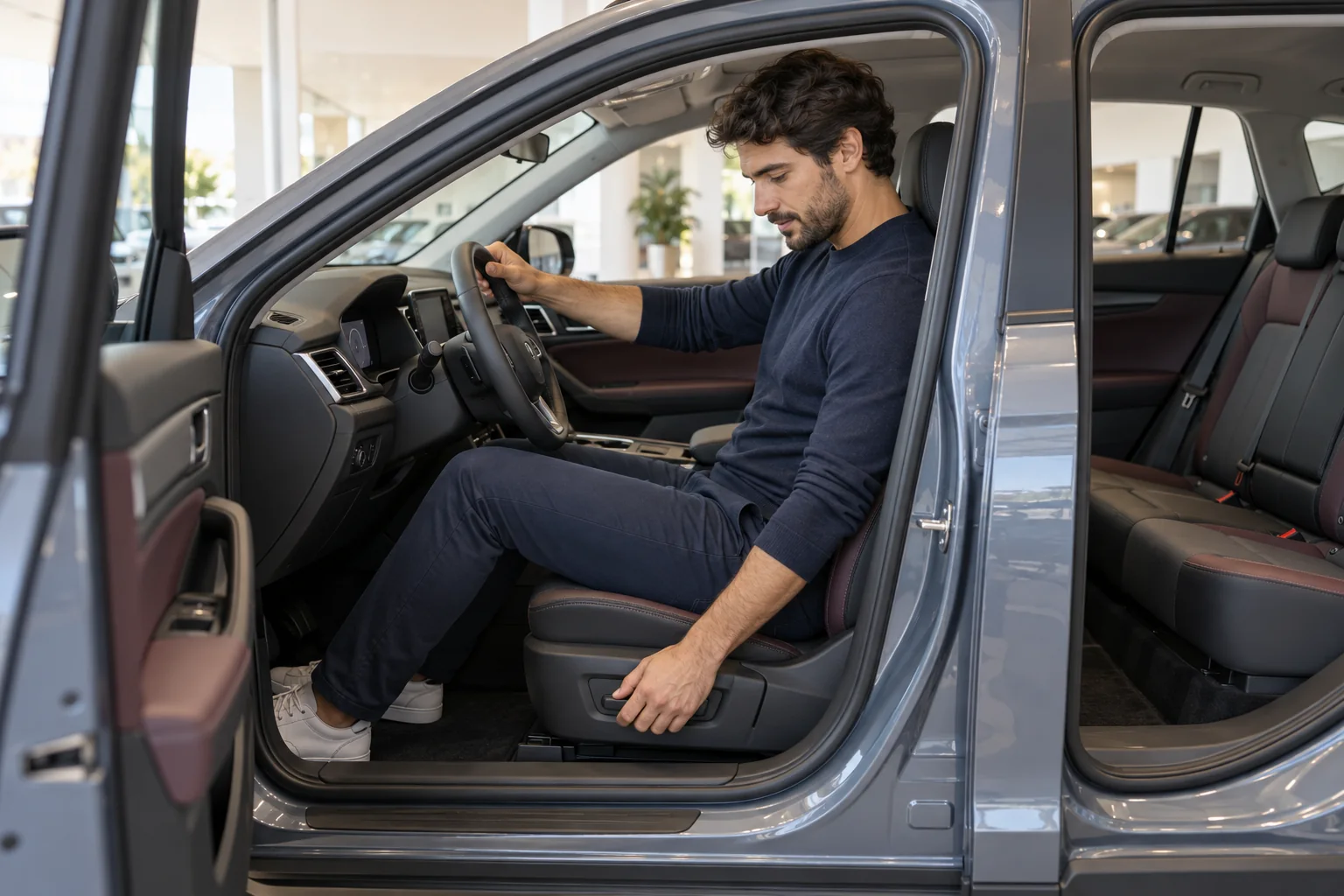
Seating fit can win a buyer and lose another.
An option rejected
One participant reports ruling out a Tiggo because they could not find a comfortable seat and steering-wheel position, and says they bought a Compass.
A positive experience
In the same discussion, a Tiggo owner describes a comfortable driving position with room for a rear passenger. They later report a trip without discomfort.
Doka’s interpretation
The contrast prevents size or equipment from becoming a promise of comfort for everyone. In Doka’s reading, the buyer needs to experience the advantage in the task that prompted the search. A benefit helps explain a choice only in relation to that person’s body, routine and acceptable compromises.
Which benefit needs to be demonstrated before expanding the offer or investing in communication?
For product and marketing teams, examine cabin access, driving position, rear-passenger space and the usual route separately. A demonstration can reveal which need the vehicle meets and which compromise remains. Price, availability and prior experience remain competing explanations.
What you can take to the next discussion
- Understand the contrast
- Read the accounts in context and compare explanations that support or challenge the initial interpretation.
- Prepare the discussion
- Use the executive analysis and conditional options to frame product, communication or channel questions.
- Check before acting
- Identify evidence gaps, comparison conditions and what would justify changing course.
What changes when an owner returns to tell the outcome?
The supplement distinguishes a listing, a reported trade and restored use, drawing on dated owner-community follow-ups.
Five comfortable seats, or seven available seats?
A new supplement compares seating-fit reports, extended-family use and space for luggage or animals. It develops a five-seat portfolio hypothesis while retaining seven-seat needs. Market size, manufacturing savings and a lower final price remain questions to test. Independent review is pending.
Continue with the complete report
Read the accounts behind the findings, compare the alternatives and see the conditions for acting or changing course. Sources are collected at the end.
A deeper investigation for your business
What does this mean for your next vehicle offer in Brazil?
Commissioned research can investigate models and alternatives defined by your business, use situations, audiences and regions. Depending on available sources, the scope can explore seating fit, running costs and the benefit worth demonstrating.
The report can be a starting point; you can also discuss commissioned work directly, without buying it first.
Questions to bring to a brief
- Product and audience
- In which situations do models in your portfolio improve the experience of people who buy, consider or reject an option?
- Price and negotiation
- When a benefit is recognised, what prevents replacement: total price, down payment, trade-in valuation or another condition?
- Trust and continued use
- How does the risk of losing access to the car affect the choice, and what can the local operation demonstrate about support?
The brief can specify models, regions and use situations for comparative analysis, competing explanations and criteria for prioritising a product or communication hypothesis. Research design and deliverables are agreed around the decision and available evidence.
How to read this research
Method, scope and review status
Exploratory analysis of documentary sources and, where included in the edition, selected public accounts. These accounts are not a representative sample; identities, purchases and claimed outcomes have not been authenticated. Interpretations and conditional proposals require further verification.
The complete report preserves source-specific dates, methods and limitations. This purchase does not include new interviews, fieldwork or a study commissioned for your company. Independent editorial and English translation review remain pending.
Does this study address your business question?
Talk to Doka about the scope and access before purchasing.
Discuss this report